
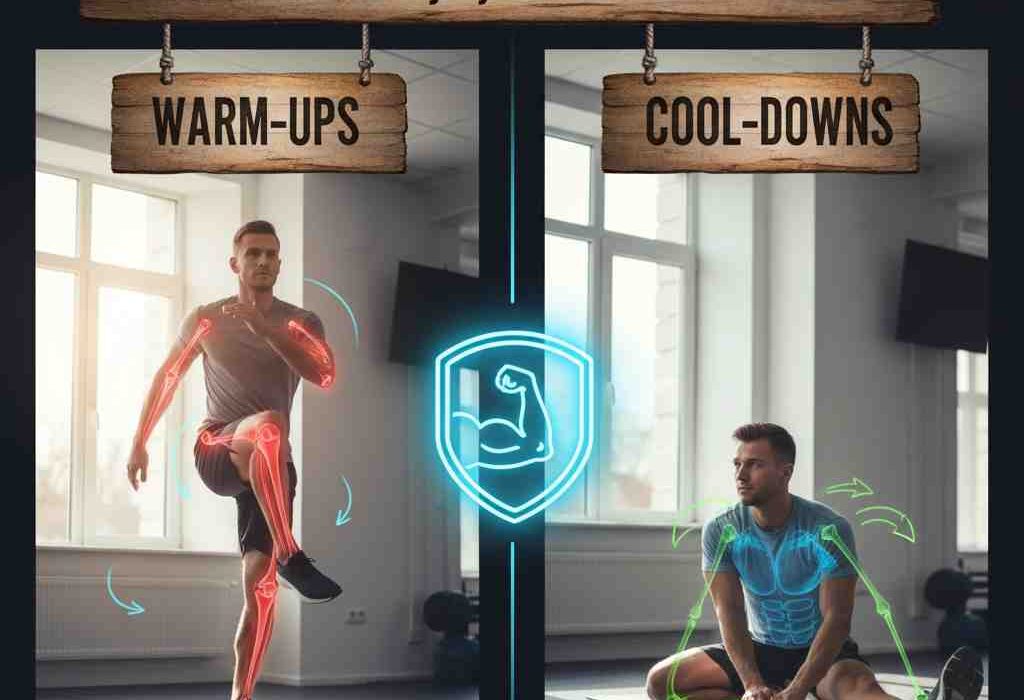
When it comes to fitness, the main event—the workout itself—gets all the attention. But the two most critical components for long-term health and performance are the ones that bookend your session: the warm-up and the cool-down. These aren’t optional extras; they’re essential phases that prepare your body for the stress of exercise and help it recover afterward. Skipping them is like driving a car at full speed immediately after starting the engine, then shutting it off without slowing down. It’s a recipe for disaster.
The Warm-Up: Preparing for Battle 🛡️
A proper warm-up does far more than just “get you warm.” It is a dynamic process that serves two main functions: physiological preparation and injury prevention.

- Increased Blood Flow and Temperature: As you warm up, your body’s core temperature rises. This increases blood flow to your muscles, making them more pliable and less prone to tearing. Think of your muscles as a rubber band: a cold one is stiff and brittle and will snap easily, while a warm one is elastic and can stretch far without breaking.
- Improved Joint Mobility: Warm-ups lubricate your joints by increasing the production of synovial fluid. This fluid acts like motor oil, allowing your joints to move smoothly through their full range of motion. This reduces friction and the risk of strains and sprains.
- Mind-Muscle Connection: A warm-up also serves as a mental rehearsal. It gives you a chance to practice the movements you’re about to perform, helping you establish the proper form and neurological pathways needed to execute the workout safely and effectively.
What to do: A good warm-up should last 5-10 minutes and involve dynamic stretches (stretches with movement). For example, before a run, you might do leg swings, butt kicks, and high knees. Before a lifting session, you might do light cardio followed by bodyweight movements that mimic the exercises you’re about to perform. Avoid static stretching (holding a stretch) before a workout, as it can temporarily weaken muscle performance.
The Cool-Down: The Recovery Phase 🧊
The cool-down is your body’s way of transitioning from a state of high stress back to a resting state. It’s a non-negotiable step that aids in recovery and helps prevent post-exercise soreness.

- Regulating Heart Rate and Blood Pressure: A cool-down gradually lowers your heart rate and blood pressure, preventing the lightheadedness or dizziness that can occur if you stop exercising abruptly. It allows your cardiovascular system to return to normal without shock.
- Waste Product Removal: Exercise produces metabolic waste products, like lactic acid, in your muscles. The cool-down helps to flush these out by maintaining blood flow, which can reduce delayed onset muscle soreness (DOMS) the next day.
- Improved Flexibility: This is the perfect time for static stretching (holding a stretch for 20-30 seconds). With your muscles warm and pliable, you can safely improve your flexibility and range of motion, which is crucial for long-term joint health and injury prevention.
What to do: A cool-down should also last about 5-10 minutes. It should involve light cardio followed by static stretches of the major muscle groups you just worked.
By consistently incorporating warm-ups and cool-downs into your routine, you’re not just improving your performance; you’re making an investment in your body’s longevity, ensuring you can continue to train hard and stay healthy for years to come.