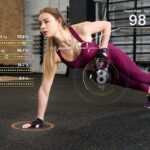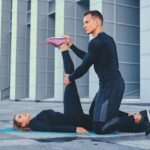
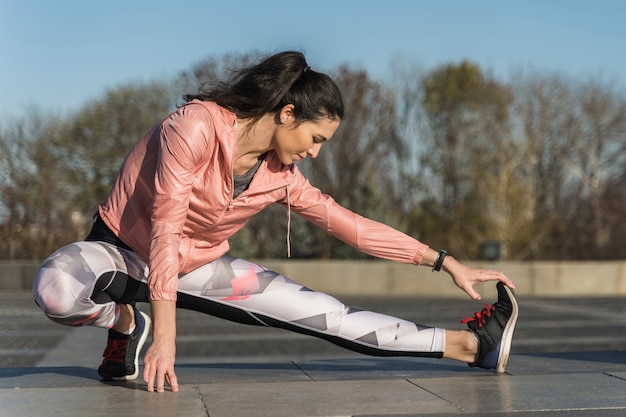
Flexibility often gets confused with mobility. Flexibility is the length a muscle can stretch (passive range). Mobility, however, is the ability of your joints to move actively through their full range of motion without pain or restriction. If you want to lift heavier, run faster, or simply move through life without chronic aches, improving your mobility is the single most effective investment you can make.
Poor mobility is the leading cause of injury. Incorporating these simple, powerful movements into your warm-up or active recovery can unlock tight joints and keep your body resilient.
The Big Four: Unlock Your Most Restricted Areas
These four movements target the four most common areas of restriction that contribute to back pain, knee issues, and poor posture.
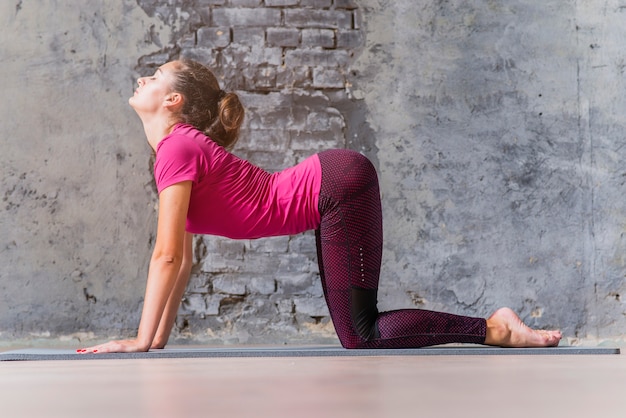
1. Cat-Cow (Spinal Health) 🐈🐄
- The Goal: Increase segmentation and awareness of the spine, improving flexibility from the tailbone to the neck.
- How to Do It:
- Start on your hands and knees (tabletop position).
- Cow Pose: Inhale, drop your belly toward the floor, lift your chest, and look slightly up (creating an arch).
- Cat Pose: Exhale, round your spine up toward the ceiling, tuck your tailbone, and drop your head toward the floor (creating a hump).
- Repetitions: Perform 10-15 slow, intentional reps, focusing on the movement of each vertebra.
2. The World’s Greatest Stretch (Hip Flexors & Thoracic Spine) 🌎
- The Goal: A fantastic all-in-one move that opens the hips (often tight from sitting) and increases rotation in the upper back (thoracic spine).
- How to Do It:
- Start in a push-up position. Step your right foot outside your right hand (low lunge).
- Drop your left knee to the floor, if comfortable, to deepen the hip stretch.
- Place your right elbow toward the ground inside your right foot.
- Then, twist your torso to the right and reach your right arm toward the ceiling, following your hand with your eyes.
- Hold the final rotation for a few seconds. Switch sides.
Targeted Joint Health
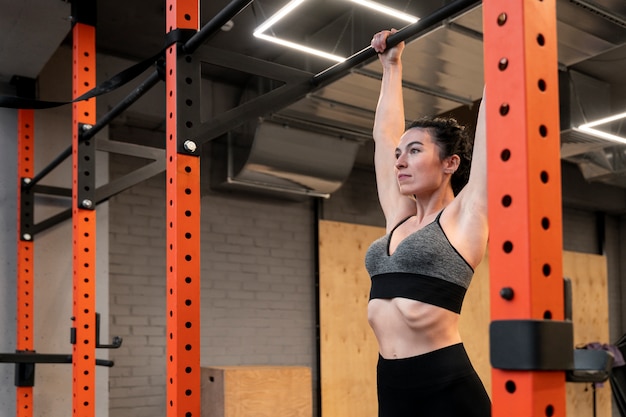
3. Passive Hang (Shoulders and Lats) 🐒
- The Goal: Decompress the spine and restore natural mobility to the shoulder joint, counteracting the effects of rounded, desk-bound posture.
- How to Do It:
- Find a sturdy overhead bar (like a pull-up bar).
- Grab the bar with a wide, overhand grip.
- Simply hang completely relaxed, letting gravity pull your body and decompress your spine. Do not actively engage your muscles.
- Hold: Start with 30 seconds and work up to 60 seconds.
4. Ankle Rocks / Ankle Circles (Ankle Mobility) 🦶
- The Goal: Improve the mobility of the ankle joint, which is crucial for deep squats, running mechanics, and preventing knee pain.
- How to Do It (Ankle Rocks):
- Get into a deep kneeling lunge position with your front foot about 6 inches from a wall.
- Keeping your heel firmly planted on the ground, try to touch your knee to the wall by driving it forward.
- Repeat 10-15 times per side. The goal is to increase the distance from the wall while still touching your knee to it.
The Implementation Rule: Consistency Over Intensity
The best mobility routine is the one you do every day. Spend 10 minutes on these movements every morning, or integrate them into your warm-up before every strength workout. Consistent, gentle work on joint range will yield far greater long-term results than occasional, aggressive stretching. Think of it as flossing for your joints.