

Lacing up your running shoes and signing up for a race is an exciting commitment. Whether it’s a brisk 5K, a challenging 10K, or the ultimate test of endurance, a half-marathon, the goal is the same: to cross that finish line strong, injury-free, and proud. But you can’t just wing it. A well-structured training plan is the key to success.
This guide will give you the foundational principles and a sample roadmap for preparing for your first race, no matter the distance.
The Foundational Principles of Race Training
No matter the distance, every good training plan is built on these core concepts:
- Consistency is King: Short, frequent runs are more effective than one long run a week. Aim for 3-4 runs per week to build endurance and consistency.
- Progressive Overload: This simply means gradually increasing the difficulty of your workouts over time. For runners, this means slowly increasing your weekly mileage to build your endurance base.
- The 80/20 Rule: 80% of your runs should be at a slow, conversational pace. This builds your aerobic base and helps your body become more efficient at burning fat for fuel. The other 20% can be faster, harder efforts to improve speed.
- Listen to Your Body: Don’t ignore pain. Rest and recovery are just as important as the runs themselves. Pushing through sharp pain is a one-way ticket to the injury bench.
- Don’t Forget Strength Training: Running is a full-body workout. Incorporate strength training (squats, lunges, planks) to build stronger muscles, which can improve your running form and prevent injuries.
Training Roadmap by Distance
1. The 5K (3.1 miles): The Perfect Starter
A 5K is an excellent and achievable goal for almost anyone. A 6-8 week training plan is usually sufficient.
- Sample Week:
- Run 1 (Easy): 20-25 minutes of easy jogging.
- Run 2 (Speed): Warm-up, then short bursts of running faster than your race pace, followed by recovery jogs.
- Run 3 (Long): The longest run of the week, gradually increasing by half a mile each week.
- Cross-Train/Rest: Take 3-4 days to rest, do some light cross-training (walking, cycling), or strength work.
2. The 10K (6.2 miles): Doubling the Distance
A 10K requires a bit more endurance and respect for the distance. An 8-12 week training plan is a good target.
- Sample Week:
- Run 1 (Easy): A relaxed run of 3-4 miles to build aerobic fitness.
- Run 2 (Intervals): Incorporate intervals (e.g., run fast for 3 minutes, jog for 2 minutes, repeat) to improve your speed and running economy.
- Run 3 (Tempo): A tempo run where you hold a comfortably hard pace for 15-20 minutes, which builds mental and physical endurance.
- Run 4 (Long): The most important run of the week. Gradually build this run up to around 7-8 miles.
- Cross-Train/Rest: 3 days to rest or do low-impact exercises.
3. The Half-Marathon (13.1 miles): The Ultimate Challenge
Training for a half-marathon is a significant time commitment, typically requiring 12-16 weeks. It’s a true test of endurance and discipline.
- Sample Week:
- Run 1 (Easy): A short, easy run (3-4 miles).
- Run 2 (Tempo/Intervals): A workout to improve your running speed and lactate threshold.
- Run 3 (Easy): Another easy run to add to your weekly mileage.
- Run 4 (Long): The cornerstone of your plan. This run gradually increases each week until you hit a peak long run of around 10-12 miles.
- Cross-Train/Rest: Take 3 days to rest, stretch, foam roll, and do some strength training.
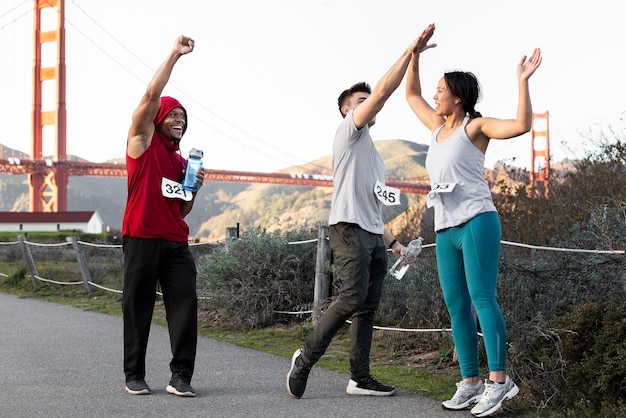
Crucial Tips for Race Day Success
- Taper: In the final 1-2 weeks before your race, reduce your mileage significantly. This allows your body to recover, restock glycogen stores, and feel fresh on race day.
- Don’t Try Anything New: Don’t wear new shoes, eat new foods, or try new gels on race day. Stick to what you’ve practiced in training.
- Fuel and Hydrate: For races longer than an hour (10K and half-marathon), practice hydrating and taking in fuel (like gels or chews) during your long runs.
- Enjoy the Moment: All the hard work has been done. Take a moment to soak it all in, enjoy the energy of the crowd, and be proud of what you’ve accomplished.
Signing up for a race is the first step. The discipline and consistency of training will be the most rewarding part of the journey. Trust the process, and you’ll cross that finish line feeling like a champion.