

A successful mission often leaves you with a tactical aftermath—sore, achy muscles that can put you out of commission. This isn’t just a sign of a good workout, bro; it’s a mission-critical part of your body’s process to rebuild. The pain is a result of delayed onset muscle soreness (DOMS), caused by microscopic damage to muscle fibers. Your mission isn’t to just endure it; it’s to manage it, speed up your recovery, and get back in the fight stronger than before.
Your goal is to distinguish between soreness and injury and to have a tactical plan for both.
The Tactical Imperative: Soreness vs. Injury
First, you have to know your enemy.
- Soreness (DOMS): This pain is a dull ache that typically begins 12-24 hours after a workout, peaks at 24-72 hours, and gradually disappears. It’s a sign of a good mission.
- Injury: This pain is often sharp, stabbing, or localized to a specific joint or tendon. It can be immediate and may worsen with movement. If you feel this, it’s a mission-critical failure, and you need to stop and seek professional help if it persists.
The Pillars of a Recovery Protocol
1. Active Recovery: The Post-Mission Patrol
Complete rest can actually make muscle soreness worse. Light activity helps increase blood flow, which brings essential nutrients to your muscles and helps clear out waste products.
- The Tactic: On your rest day, perform some light cardio, like a brisk walk, a bike ride, or a light swim. This is your active recovery, your way of working smarter, not harder.
2. Temperature Therapy: The Hot & Cold Tactic
Using temperature is a simple but effective way to manage pain and speed up recovery.
- Cold: Cold therapy, like an ice pack, can help numb the pain and reduce inflammation immediately after a workout.
- Heat: Heat therapy, like a hot bath or a heating pad, increases blood flow and helps your muscles relax. It’s better for soreness that has set in.
- The Tactic: Consider contrast therapy, alternating between cold and hot water. This creates a “pumping” effect that flushes out soreness and brings in fresh, nutrient-rich blood.
3. Nutritional Ammunition: The Repair Fuel
What you eat after a mission is as important as the mission itself.
- Protein: This is the most crucial nutrient for muscle repair. Your body needs it to rebuild the microscopic tears in your muscle fibers.
- The Tactic: Consume a meal with a good source of protein within an hour or two of your workout.
- Tart Cherry Juice: This is your secret weapon. Research shows it can significantly reduce muscle soreness due to its anti-inflammatory properties.
4. The Tactical Arsenal: Your Recovery Tools
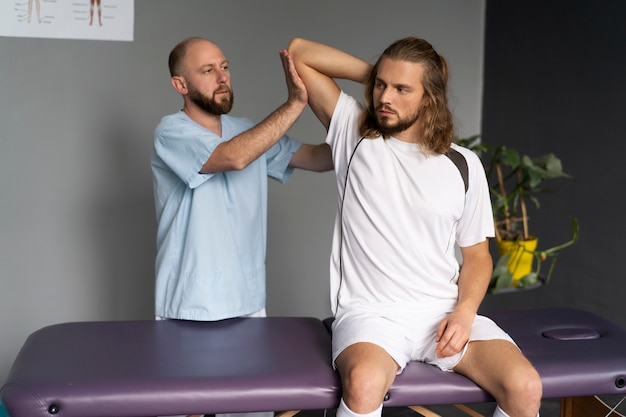
- Foam Rolling: Think of this as a self-guided deep tissue massage. It helps break up muscle knots and improves blood flow.
- Stretching: Gentle stretching after a workout can help improve flexibility and range of motion, which is crucial for preventing future injuries.
The Bottom Line: Soreness is a sign of progress, not a reason to quit. By having a tactical plan for pain management, you can reduce your downtime, speed up your recovery, and come back stronger for your next mission.